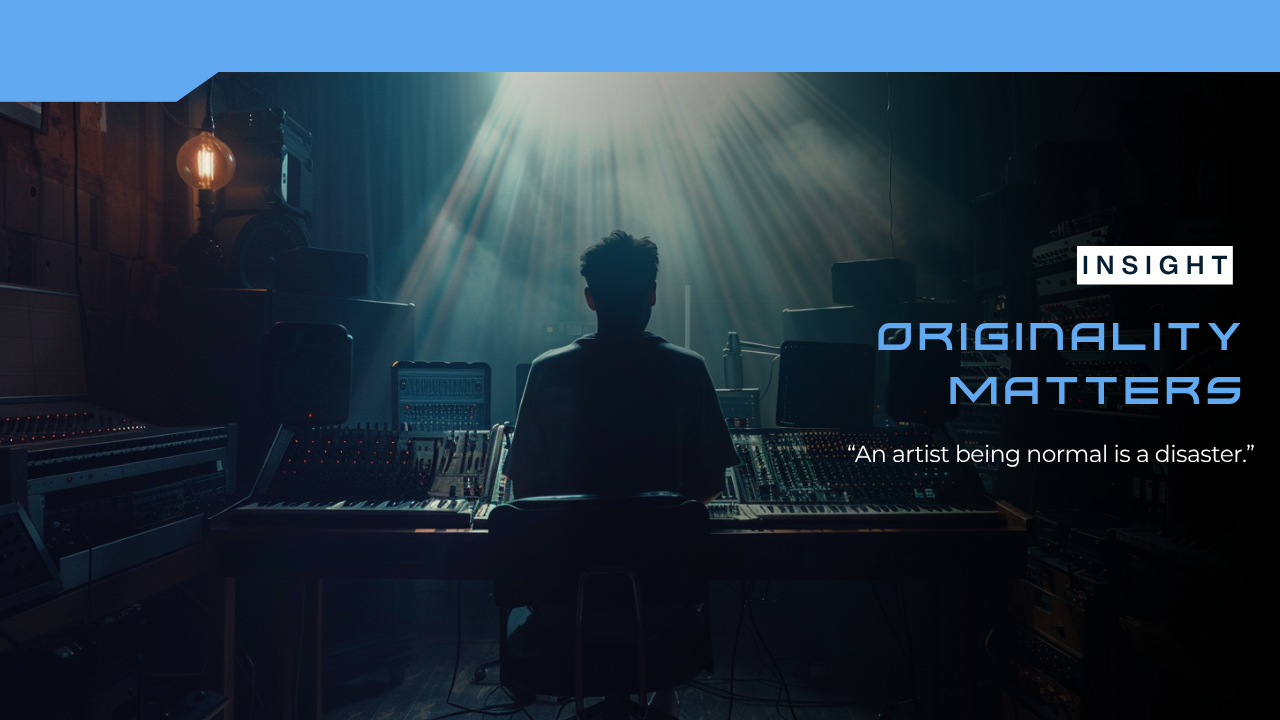
The Shift That Changed Everything: How Recording Technology Reshaped Music Production

The way music is created today can feel almost limitless. A laptop, a pair of headphones, and the right software can open the door to production tools that once required entire studios packed with specialized equipment.
That kind of accessibility is easy to take for granted.
A 1986 documentary from RAI offers a fascinating look at the moment just before music production crossed that threshold. Originally featured in Computer Music, the film traces the evolution of recording and playback technology, from mechanical playback systems to the early digital tools that were beginning to reshape the industry.
What makes the footage especially compelling is that it captures a true turning point, a snapshot of the industry standing between two worlds.
From Mechanical Sound to Magnetic Possibility
The earliest recording technologies were built around physical limitations.
Devices like the phonograph and gramophone captured sound mechanically, engraving audio vibrations directly into a medium that could later reproduce them. These inventions changed how music was shared, but they offered little flexibility.
Once recorded, the performance was fixed.
That changed dramatically with the rise of magnetic tape in the mid-20th century.
Tape recording introduced editing, layering, and manipulation in ways that were previously impossible. Engineers could splice performances together, reverse audio, adjust timing, and experiment with sound design in a far more hands-on way.
This era laid the groundwork for modern production techniques, especially in electronic and experimental music.
The Machines Behind Early Electronic Music
One of the most interesting details in the documentary is its use of vintage analogue equipment to demonstrate earlier methods of electronic composition.
Among the gear shown is the Brüel & Kjær beat frequency oscillator, a piece of equipment dating back to the 1950s and 60s.
Tools like this were not designed for music production in the way we think of synthesizers today. They were often scientific or laboratory instruments repurposed by composers exploring electronic sound.
Creating music with these systems was highly technical.
Generating even a simple tone often required patching together multiple pieces of equipment, carefully adjusting frequencies, recording results to tape, and physically editing sections by hand.
What now takes seconds once demanded precision, patience, and often an entire team.
The Arrival of Digital Systems
By 1986, the shift toward digital production was already underway.
Computer-based sequencing, digital synthesis, and emerging sampling technologies were beginning to redefine what was possible. Systems that once relied on large modular setups were becoming increasingly compact and programmable.
This marked a fundamental change in workflow.
Instead of building sounds entirely through hardware manipulation, composers could begin shaping music through software logic, sequencing data, and digital processing.
It was not just a technological upgrade. It was a creative shift.
For the first time, individual creators could access tools that had previously been locked inside universities, research institutions, and high-end studios.
The Birth of the Modern Producer
Looking back, this transition helped create the production landscape we know today.
The rise of digital audio workstations eventually condensed decades of hardware innovation into software environments that could run on personal computers.
Tasks that once required dedicated oscillators, reel-to-reel machines, signal processors, and mixing consoles became accessible inside a single session file.
This changed who could make music.
It lowered barriers to entry, expanded experimentation, and helped shape entirely new genres built around digital workflows.
From bedroom producers to large-scale scoring houses, the democratization of music technology has had an undeniable impact on how music is created and distributed.
Why This Moment Still Matters
What makes this 1986 documentary so interesting is that it captures a moment of uncertainty and possibility.
The analogue methods shown throughout the film represented decades of innovation and craftsmanship. At the same time, the digital tools just beginning to emerge hinted at an entirely different future.
That future arrived quickly.
Within a few years, entire production environments would shrink into computer screens. The process of creating, editing, and distributing music would become faster, more flexible, and dramatically more accessible.
For anyone working in music today, revisiting this era is a reminder of how quickly technology evolves, and how every major shift opens the door to new creative possibilities.
The tools may change, but the drive to push sound forward remains the same.
Thanks for reading.
Let’s Collaborate!
Need help building the tone for your production? Hit us up – the Rareform Audio team would love to help you create the perfect soundtrack that speaks to your audience and enhances the power of your visual storytelling to new heights!
++

++
Rareform Highlights


++
Join our Spotify Playlist and vibe with us! Featuring an array of tunes our team has been listening to.
++