How Composers Build a Sound Palette
A film’s (or a specific film composer’s) sound can often be recognizable before you know exactly why.
It might come from a certain type of synth, a particular approach to percussion, the way textures are layered, or the way familiar sounds are processed. These choices form what is often called a sound palette, a collection of instruments, samples, textures, effects, and processing techniques that a composer can return to across a project.
Creating a sound palette is less about collecting as many sounds as possible and more about figuring out which sounds actually belong to your musical identity.
Here’s how composers can approach that process in a practical way.
What Is a Sound Palette?
A sound palette is a curated group of sonic elements that work well together and can be used consistently throughout a piece, collection of tracks, or body of work.
It can include:
Synths and virtual instruments
Drum samples and percussion
Field recordings
Found sounds
Guitar, piano, strings, or other acoustic instruments
Vocal textures
Distortion, saturation, and other processing
Reverbs and delays
Custom effects and sound design elements
The important part is curation.
A folder containing thousands of unrelated samples is a library. A sound palette is more intentional. It contains sounds that have characteristics you understand and know how to use.
For example, a composer might build a palette around dry, close percussion, warm analog-style synths, heavily processed piano, and short room reverbs. Another composer might work with distorted drums, granular textures, wide synthesizers, and long atmospheric reverbs.
Neither approach is inherently better. The goal is to establish a group of sounds that gives you a consistent starting point.
Start With the Sound You Want, Not the Plugin
One of the easiest ways to lose cohesivness is to start browsing plugins before deciding what you are actually looking for.
Instead, start by describing the sound.
Do you want the bass to feel clean and controlled, distorted and aggressive, or soft and rounded? Should the percussion feel close and dry or distant and spacious? Should the melodic elements feel organic or synthetic?
These questions give you something to search for.
Once you know the characteristics you want, you can choose the instruments and processing that get you there. This also makes it easier to avoid constantly switching between sounds simply because a new preset happens to sound interesting.
Choose a Few Core Sounds
A personal palette does not need hundreds of sounds.
In fact, limiting your choices can make the process more useful.
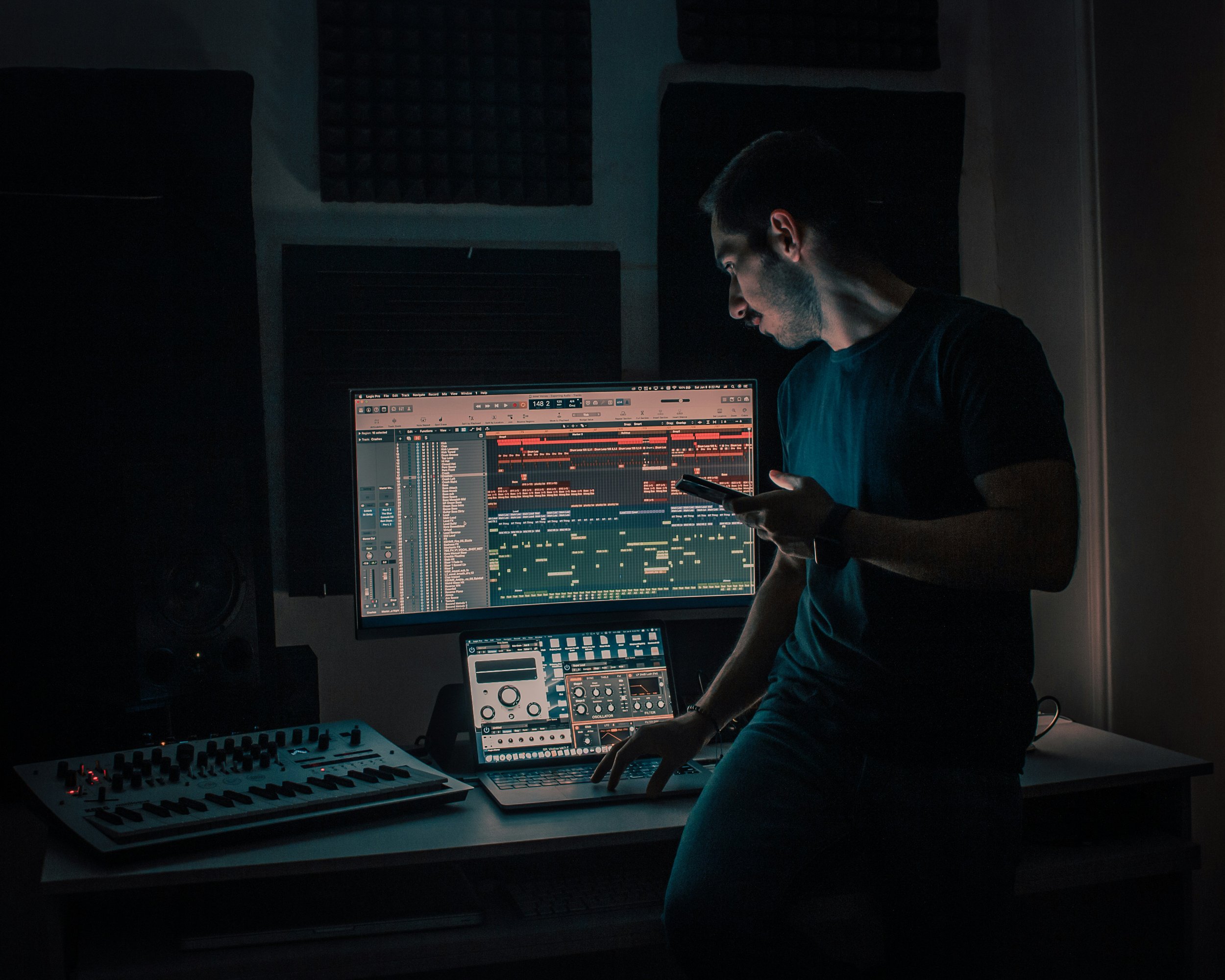
Try selecting a small group of core elements for a project. You might choose one or two primary synths, a few drum sounds, several textures, and a handful of effects that you know work together.
The limitation forces you to learn those sounds more deeply.
A single synth patch can become a bass, a pad, a rhythmic texture, or a heavily processed transition depending on how you manipulate it. A simple percussion sample can be pitched, stretched, distorted, layered, or resampled into something completely different.
The original sound becomes less important than what you do with it.
Resample Your Own Sounds
One of the most effective ways to move away from presets is to turn your existing sounds into new source material.
Take a synth, drum hit, instrument recording, or field recording and print it to audio. From there, you can reverse it, stretch it, pitch it, chop it up, distort it, filter it, or layer it with another sound.
This creates a useful middle ground between using a preset exactly as it was designed and creating every sound completely from scratch.
Over time, these processed recordings can become a collection of sounds that are specific to your workflow.
Build a Palette Around a Project
A personal palette does not have to remain exactly the same forever.
Different projects call for different sonic decisions.
A composer working on a dark thriller may want a completely different palette from someone creating music for a comedy, documentary, commercial, or action campaign.
One useful approach is to create a project-specific palette while keeping a few personal characteristics consistent.
For example, you might change the instrumentation and textures from project to project while maintaining a preference for certain types of distortion, spatial processing, percussion, or low-end design.
That gives the music room to fit the project without losing your own approach.
Pay Attention to Processing
The identity of a sound is not always determined by the instrument itself.
Processing can be just as important.
Two composers can start with the same piano, synth, or drum sample and end up with completely different results because of how they EQ, compress, distort, reverberate, or layer the sound.
Start paying attention to the processing choices you repeatedly make.
Do you tend to remove high frequencies from certain sounds? Do you prefer short rooms over large reverbs? Do you regularly use saturation to add texture? Do you like heavily compressed percussion?
These recurring decisions can become part of your palette.
It can be useful to save these processing chains as starting points, but they should remain flexible. The goal is consistency, not putting every sound through the exact same chain.
Organize Sounds by Function
A personal library becomes much more useful when you can actually find what you need.
Instead of keeping everything in one large folder, organize sounds according to how you use them.
You could create categories such as:
Low-end
Percussion
Melodic
Textures
Impacts
Risers
Atmospheres
Vocal processing
Synths
Field recordings
You can also organize sounds by project or mood when that makes sense.
The exact system is less important than being able to quickly find sounds that you already know and trust.
Know When to Break the Palette
Consistency does not mean repetition.
A palette should give you a framework, but it should not prevent you from introducing something unexpected when the music calls for it.
If every track uses the same kick, snare, synth, reverb, and processing chain, the palette can start working against you.
Instead, think of your core sounds as anchors. Once those are established, you can introduce new elements that contrast with them.
A single unusual sound can have more impact when the rest of the track has an established sonic identity.
Listen for What You Keep Coming Back To
Your personal sound palette is often already taking shape before you formally create one.
Look through recent projects and listen for patterns.
Which instruments keep appearing? Which samples do you repeatedly reach for? Are there certain textures or effects that show up in multiple pieces? What types of sounds make you want to build an idea around them?
Those patterns can tell you more about your sound than trying to define your style in a sentence.
Start collecting those recurring elements and build from there.
A Sound Palette Is a Tool, Not a Formula
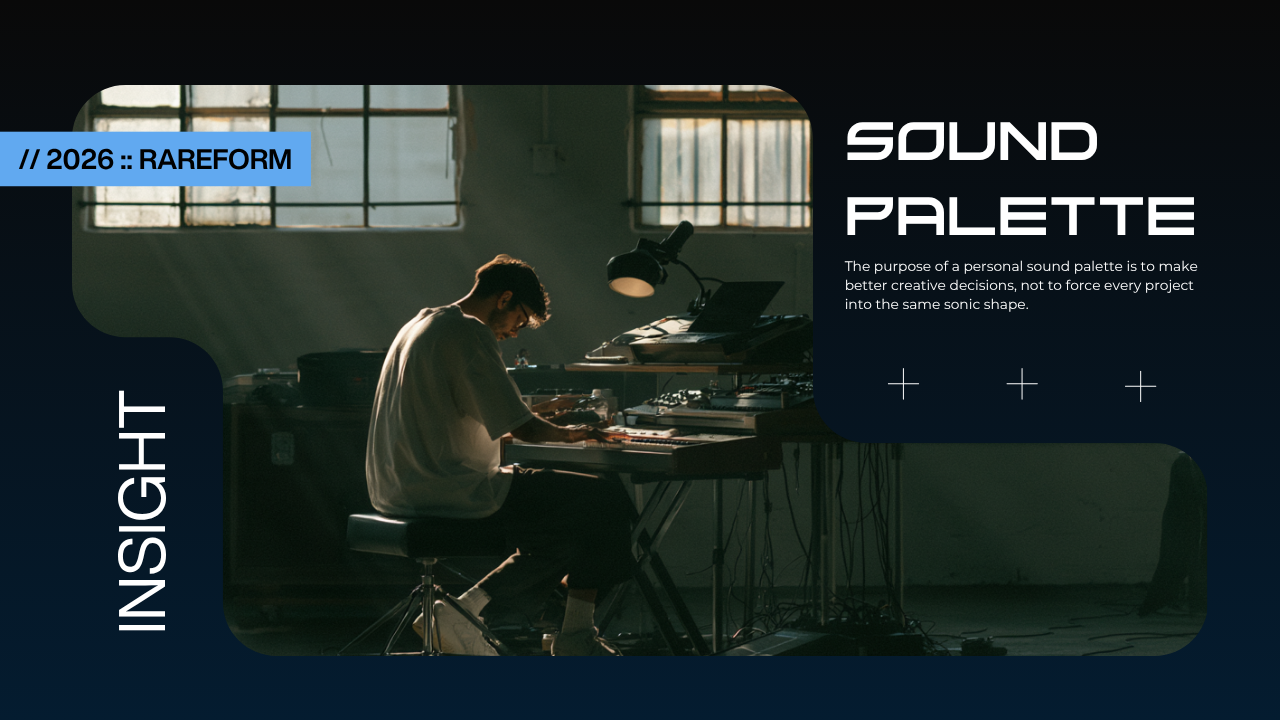
The purpose of a sound palette is to make intentional cohesive decisions, not to force every project into the same sonic shape.
A strong palette gives you a set of sounds you understand well. You know how they respond to processing, how they sit together in a mix, and what kind of musical ideas they can support.
Over time, that familiarity can make the writing and production process faster while also giving your work a more recognizable character.
Start small. Choose a few sounds you genuinely like, process them in different ways, resample the results, and keep track of the elements you continue returning to.
That collection can become the foundation of a sound palette for your specific project
Let’s Collaborate!
Need help building the tone for your production? Hit us up – the Rareform Audio team would love to help you create the perfect soundtrack that speaks to your audience and enhances the power of your visual storytelling to new heights!

++
Rareform Highlights



++
Join our Spotify Playlist and vibe with us! Featuring an array of tunes our team has been listening to.
++