How Modern Music Composers Balance Speed and Creativity
In film, television, trailers, and advertising, composers are often working against tight deadlines. From developing an initial concept to delivering the final mix, every stage requires careful attention to both creative and technical details.
For modern composers, balancing speed and creativity comes down to having a clear direction, an efficient workflow, and knowing where to focus their efforts.
Here are some practical approaches that help composers work efficiently without compromising the quality of their music.
Understanding the Creative Brief Before Composing
One of the easiest ways to lose time during composition is to start writing without a clear understanding of the project's needs.
For example, a brief requesting a dark, cinematic track might sound straightforward, but the music could serve several different purposes. Is it meant to build suspense, create a sense of mystery, or lead into a dramatic reveal?
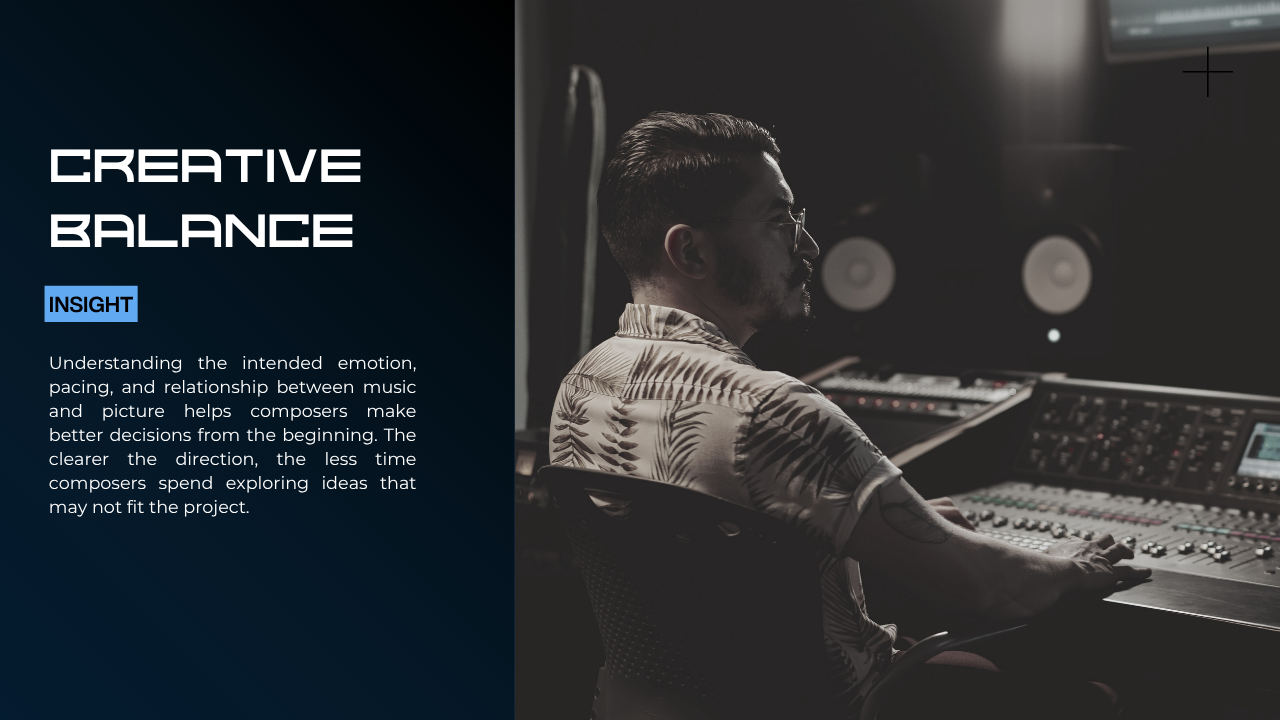
Understanding the intended emotion, pacing, and relationship between music and picture helps composers make better decisions from the beginning.
For a 60-second trailer cue, identifying important moments such as transitions, tension builds, and final impacts can provide a useful starting point before developing the full arrangement.
The clearer the direction, the less time composers spend exploring ideas that may not fit the project.

Separating Composition From Production
Modern digital audio workstations (DAWs) allow composers to write, arrange, sound design, and mix within the same session. While convenient, this can make it easy to get distracted by technical details before the music itself is fully developed.
For instance, spending too much time adjusting a synthesizer sound or perfecting a mix early on can interrupt the writing process.
A more efficient approach is to establish the core musical ideas first, including melodies, harmonies, rhythms, and overall structure. Once those elements are working, composers can focus on instrumentation, sound design, and production details.
This doesn't mean sound design should always come later. In trailer music, for example, a particular texture or sound can inspire the entire composition.
The key is knowing when to explore creative ideas and when to shift attention toward refining them.
Using DAW Templates and Creative Limitations
Having an organized production setup can save valuable time, especially when working across multiple projects.
DAW templates allow composers to prepare frequently used instruments, effects, routing, and track groups in advance. Instead of rebuilding the same session setup, they can spend more time writing music.
However, efficiency also involves managing creative choices.
With thousands of sounds and plugins available, it's easy to spend hours searching for the perfect instrument. Limiting the initial selection to a few sounds can encourage composers to focus on developing a strong musical idea.
For example, starting with a piano, synthesizer, and string section may be enough to establish a cue's melody, harmony, and emotional direction before introducing additional layers.
Templates handle repetitive technical tasks, while creative limitations help reduce unnecessary decisions. Both can make the composing process more focused.
Prioritizing Key Musical Moments
When composing for visual media, certain moments require more attention than others.
A dramatic reveal, a sudden transition, or the final shot of a trailer might determine how the surrounding music should develop.
Rather than writing an entire cue from beginning to end, composers can sometimes work backward from these important moments.
For example, if a trailer builds toward a major impact at the 45-second mark, establishing that moment first can help determine the pacing, instrumentation, and intensity of the preceding sections.
This approach provides a clear musical destination and can reduce the need for major structural changes later.
It's also important to recognize when music should take a supporting role. A sustained note, subtle texture, or brief moment of silence can sometimes serve a scene better than a large orchestral hit.
Effective composition involves understanding which moments need emphasis and which benefit from restraint.
Managing Revisions and Knowing When to Finish
Revisions are a regular part of composing for commercial projects. An editor may request a longer buildup, a director might want less percussion under dialogue, or a creative team may need an alternative version.
Preparing for these changes can make a significant difference in turnaround time.
Organized sessions, clearly labeled tracks, and separate instrument stems allow composers to adjust specific elements without rebuilding the entire cue.
For music licensing, having alternative mixes and shorter edits available can also make tracks easier to adapt to different campaigns.
Equally important is knowing when a composition is ready for delivery.
Composers can spend hours refining small details, but additional adjustments don't always improve the final result. Returning to the original brief helps determine whether the music communicates the intended emotion, supports the visuals, and meets the project's requirements.
The goal is to focus on revisions that meaningfully improve the music rather than making changes simply because there's still time available.
Final Thoughts
Balancing speed and creativity is an essential part of composing for today's media industry. While technology has made music production more efficient, the ability to make thoughtful creative decisions remains just as important.
At Rareform Audio, we recognize that every project comes with its own creative direction and production requirements. Whether developing custom music or providing tracks from our curated catalog, understanding how music works alongside visuals is central to the process.
For composers, a clear brief, organized workflow, and confident decision-making can make tight deadlines more manageable while maintaining the quality and originality each project deserves.
Let’s Collaborate!
Need help building the tone for your production? Hit us up – the Rareform Audio team would love to help you create the perfect soundtrack that speaks to your audience and enhances the power of your visual storytelling to new heights!

++
Rareform Highlights

++
Join our Spotify Playlist and vibe with us! Featuring an array of tunes our team has been listening to.
++